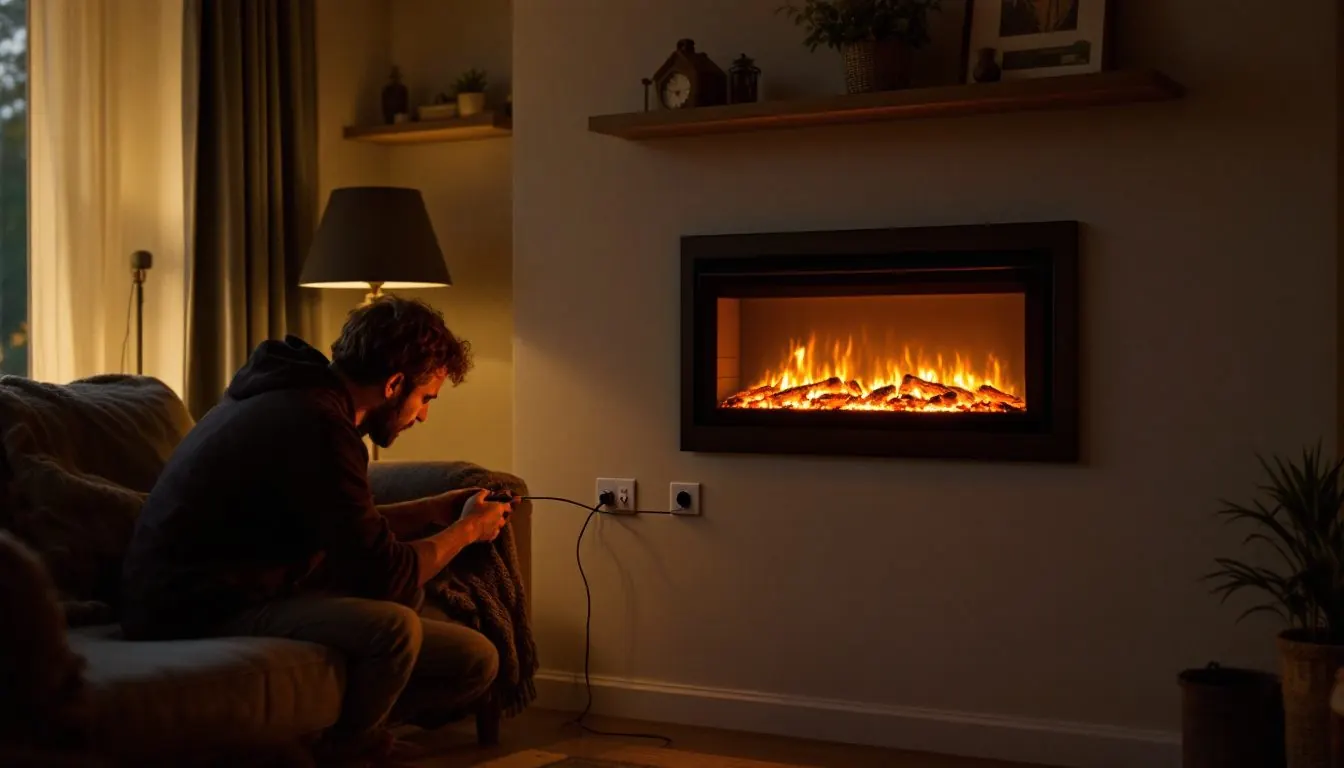
How much does an electric fireplace cost to run? A typical 1,500 watt electric fireplace costs about 27.3 cents an hour with the heater on high at the September 2026 US average residential price of 18.17 cents per kilowatthour, and puts out about 5,118 Btu per hour. Flame only, at under 300 watts, costs about 5.5 cents.
What does an electric fireplace cost per hour and per month in your state?
Between 19.9 cents an hour in Nevada and 72.5 cents in Hawaii with the heater on high, at September 2026 residential prices from EIA Electric Power Monthly Table 5.6.A, the newest month EIA has published. The US average was 18.17 cents per kilowatthour, up from 18.05 a year earlier. The math: rating plate watts divided by 1,000, times hours, times your price.
| State or area | Residential price, Sept 2026 (cents per kWh) | Heater on high, per hour | Heater cycling 50%, per hour | Flame only at 300 W, per hour | Heater on high, 4 hours a day for 30 days |
|---|---|---|---|---|---|
| Nevada (lowest state) | 13.25 | 19.9 cents | 9.9 cents | 4.0 cents | $23.85 |
| Texas | 15.91 | 23.9 cents | 11.9 cents | 4.8 cents | $28.64 |
| US average | 18.17 | 27.3 cents | 13.6 cents | 5.5 cents | $32.71 |
| New York | 28.42 | 42.6 cents | 21.3 cents | 8.5 cents | $51.16 |
| California | 30.86 | 46.3 cents | 23.1 cents | 9.3 cents | $55.55 |
| Hawaii (highest state) | 48.31 | 72.5 cents | 36.2 cents | 14.5 cents | $86.96 |
HVAC Brief calculation: 1.5 kWh per hour on high, 0.75 kWh at 50% cycling, 0.3 kWh flame only, times EIA September 2026 residential prices.
What does the flame effect alone cost?
Dimplex says its flame “uses slightly under 300 Watts of power,” which is at most 5.5 cents an hour, or about $6.54 a month at four hours a night, at the US average. Dimplex’s own support page still quotes “3¢ per hour” for flame only and “approximately 8 ¢ per hour” with the heater “cycling at 50%.” Those figures imply roughly 10 to 11 cents per kilowatthour; at today’s 18.17 the 50% case is 13.6 cents.
How much heat does a 1,500 watt electric fireplace really put out?
About 5,118 Btu per hour on high, because EIA fixes 1 kilowatthour at 3,412 Btu and a resistance element turns what it draws into heat in the room. The flames are LED light effects with no heating value. Dimplex calls the element a “fan-forced heater”; Touchstone lists a “coil wire heater with blower.” What the rating plate says matters more than the box: plates we read run from 1,350 to 2,800 watts.
| Model (maker document) | Rated input | Heat output, HVAC Brief calculation | Maker’s own heat claim |
|---|---|---|---|
| Dimplex DF28L-PRO / DF26 series (owner’s manual), room at 0 C | 1500 W, 12.5 A, 120 V plug-in | 5,118 Btu per hour | “about 5115 BTU of total heat” (Dimplex support) |
| Same Dimplex unit, room at 25 C (77 F) | 1350 W | 4,606 Btu per hour | None stated |
| Napoleon Alluravision CHS and CHD, 120 V (installation manual) | MAX 1450W, 15 A grounded circuit | 4,947 Btu per hour | None stated |
| Napoleon Alluravision CHD hardwired at 240 V | 2800W | 9,554 Btu per hour | None stated |
| Touchstone Sideline 45, model 80025 (product page) | 1,500 W, 120 V | 5,118 Btu per hour | “Supplemental heat up to 400 square feet (5,000 BTUs)” |
Compiled by The HVAC Brief from the Dimplex, Napoleon and Touchstone documents in Sources. Btu per hour = watts / 1,000 x 3,412 (EIA).
The Dimplex row is the one retail pages skip: the same plug-in unit is rated 1500 W at 0 C but 1350 W at 25 C, so in a warm room it draws and delivers about 10% less. Touchstone’s 400 square feet is a maker estimate; insulation and ceiling height decide whether 5,000 Btu keeps up. That output matches the plug-in space heaters we costed separately, because the physics is identical, and none of it survives a power cut.
Is a “100% efficient” electric fireplace cheaper than gas or a heat pump?
Usually not. Every watt ends up as room heat, but at 18.17 cents per kilowatthour that heat costs $53.25 per million Btu, by our arithmetic from EIA’s 3,412 Btu factor. “100% efficient” describes the conversion in the room, not the price of the heat.
Natural gas cost residential customers $13.96 per thousand cubic feet in January 2026 and $27.05 in August 2026 (EIA, US residential natural gas price). At EIA’s 1,036 Btu per cubic foot that is $13.47 and $26.11 per million Btu of fuel. So a gas fireplace that delivers more than about 25% of its fuel energy into the room beats resistance heat at January prices, and one that delivers more than about 49% beats it at August prices. Check your own unit’s rating in our gas fireplace guide; the venting types and pilot costs are covered there.
A heat pump is the cheaper electric route. DOE’s Energy Saver page (archived copy) says a heat pump “can reduce your electricity use for heating by up to 75% compared to electric resistance heating,” which at the US average is as low as $13.31 per million Btu, and cold-climate models keep most of their capacity below freezing. Fuel by fuel at your own prices is in our cost of heat by fuel tables. The electric fireplace’s honest best case is the one DOE’s archived Small Space Heaters page names: small heaters “can be less expensive to use if you only want to heat one room,” with the central thermostat turned down.
Does an electric fireplace need its own 15 amp circuit?
Not always, but it needs a 120 volt, 15 amp grounded outlet with little else on it. At 1,500 watts it draws 12.5 amps, 83% of a 15 amp breaker’s rating by our arithmetic, so a vacuum or a second heater on the same circuit can trip it. The Dimplex DF Series manual says “A 15 Amp, 120 Volt circuit is required,” calls a dedicated circuit “preferred, but not essential in all cases,” and requires one if the breaker trips or the fuse blows “on a regular basis.” Finding what else shares the circuit is the job in a space heater tripping the breaker.
Larger built-in models can be hardwired. The Napoleon Alluravision installation manual lists a “120V, 15 Amp minimum grounded outlet” for plug-in use and allows 240 V hardwiring on CHD models only, where “the wire and double-pole power supply breaker must be rated for 240V minimum 15 amps, maximum 20 amps.” That 240 V setting is what lifts the plate to 2800W. Permit and inspection rules for the new circuit are set locally.
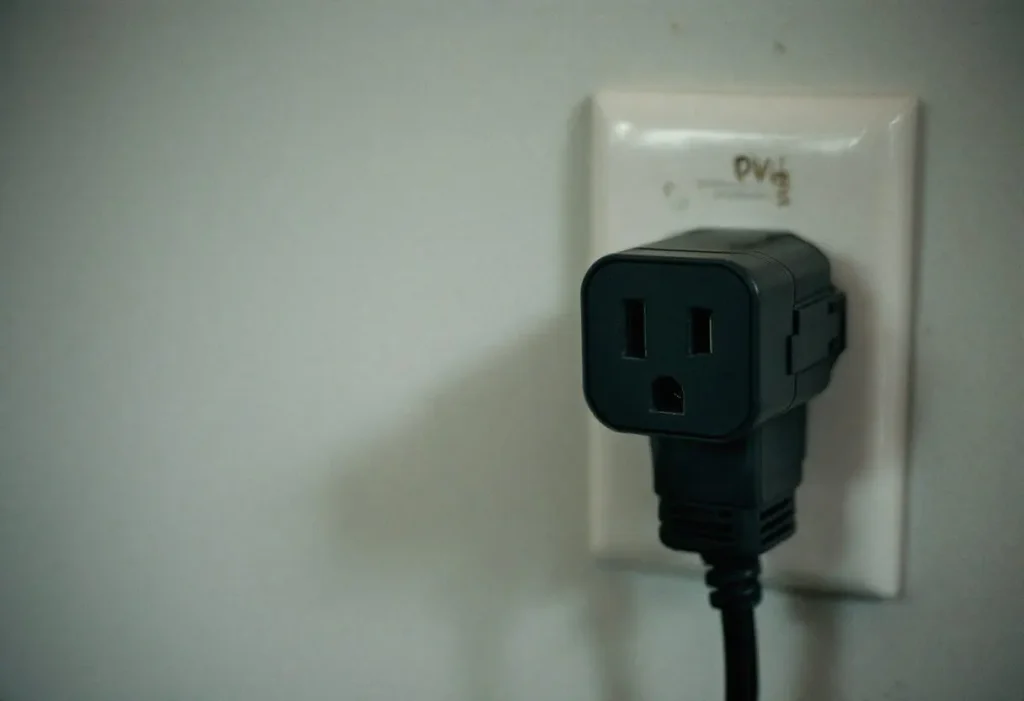
Both makers forbid an extension cord or “relocatable power tap (outlet/power strip),” and CPSC Publication 098 says to stop using a heater if the plug, outlet or faceplate is hot and have a qualified electrician check the outlet. A hot plug often shows up by smell first, and an electric heater that smells like burning separates that warning from dust burn-off that fades.
Which safety listing should an electric fireplace carry, UL 1278 or UL 2021?
UL 1278 for a unit that plugs in and moves, UL 2021 for one that is fixed in place, and some built-ins carry both. UL 1278 covers “movable and wall- or ceiling-hung electric room-heating equipment rated 600 volts or less” and was last revised May 29, 2025. UL 2021 covers “fixed and location-dedicated electric room heating equipment” and was last revised January 21, 2026.
Napoleon’s Alluravision manual shows both: “CSA 22.2 NO. 46 / UL 1278” on the cover, while its rating plate illustration in section 2.3 reads “CSA 22.2 NO. 46 AND UL 2021.”
With nothing burning, there is no carbon monoxide and no vent; Dimplex says “no combustible energy sources are used to produce the flame.” The fire risk is the heater element. CPSC estimates portable electric heaters were involved in about 1,200 fires a year from 2008 to 2010, and its rules are to keep beds, sofas and curtains at least 3 feet (0.9 m) from the front, sides and rear, and never to leave a heater running unattended or while you sleep. The overnight question gets its own answer in whether it is safe to sleep with a space heater on.
Every unit we read has an overheat cutout. On the Dimplex DF Series it “will not come back on without being reset”: unplug the unit and wait 5 minutes. If heat stops while the flames keep running, the reset times by maker are in electric fireplace not heating.
Insert, wall mount or freestanding: which electric fireplace type fits your room?
Choose by installation; inside, most hold the same 120 volt, 1,450 to 1,500 watt heater. Dimplex says its plug-in DF Series firebox “can give your existing fireplace new life.” Touchstone’s recessed Sideline 45 “can be plugged in or hardwired,” and Napoleon allows 240 V hardwiring on CHD models only. Freestanding mantels and TV stands plug in and move; Dimplex says its TV stands “are tested to support up to 150lbs.” A combustion fireplace insert burning wood, pellets or gas is a different appliance, vented through a chimney liner.
How we researched this
Research date: November 27, 2026. Read: EIA Table 5.6.A for September 2026, the EIA residential gas price series and conversion factors, the Dimplex DF Series manual and support page, the Napoleon Alluravision manual, the Touchstone Sideline 45 page, the UL 1278 and UL 2021 scope pages, CPSC Publication 098 and two archived DOE pages.
This update replaced July 2026 prices with September 2026 and added the 240 V and warm-room ratings. Excluded: retailer figures (5,200 Btu per 1,500 W and 12 cents per kWh, wrong or stale), purchase and installation prices (no federal series) and gas fireplace efficiencies we could not trace to a maker document.
Frequently asked questions
Can you leave an electric fireplace on all night?
Not with the heater running. CPSC Publication 098 says never to leave an electric heater operating unattended or while you sleep, and to keep beds and curtains at least 3 feet away. Use the shut off timer: the Dimplex DF Series timer runs from 0.5 to 8 hours, and Touchstone lists 30 minutes to 7.5 hours.
Can I plug an electric fireplace into an extension cord?
No. The Dimplex and Napoleon manuals both prohibit extension cords and relocatable power taps, and CPSC says never to power a heater with an extension cord or power strip. A 1,500 watt heater draws 12.5 amps at 120 volts, enough to overheat a light cord or a loose outlet.
Is an electric fireplace cheaper to run than a gas fireplace?
Rarely, per unit of heat. Resistance heat costs $53.25 per million Btu at 18.17 cents per kilowatthour, while EIA’s residential gas price works out to $13.47 per million Btu of fuel in January 2026. A gas fireplace delivering more than about 25% of that fuel into the room is cheaper per Btu at those prices.
Sources
- U.S. Energy Information Administration. “Electric Power Monthly, Table 5.6.A” (September 2026). https://www.eia.gov/electricity/monthly/epm_table_grapher.php?t=epmt_5_6_a. Accessed November 2026.
- U.S. Energy Information Administration. “U.S. Price of Natural Gas Delivered to Residential Consumers.” https://www.eia.gov/dnav/ng/hist/n3010us3m.htm. Accessed November 2026.
- U.S. Energy Information Administration. “Units and calculators explained.” https://www.eia.gov/energyexplained/units-and-calculators/. Accessed November 2026.
- U.S. Department of Energy, Energy Saver. “Heat Pump Systems.” Archived copy. https://web.archive.org/web/20250601023749/https://www.energy.gov/energysaver/heat-pump-systems. Accessed November 2026.
- U.S. Department of Energy, Energy Saver. “Small Space Heaters.” Archived copy. https://web.archive.org/web/20250621020646/https://www.energy.gov/energysaver/small-space-heaters. Accessed November 2026.
- U.S. Consumer Product Safety Commission. “Reducing Fire Hazards for Portable Electric Heaters,” Publication 098. https://www.cpsc.gov/s3fs-public/heaters.pdf. Accessed November 2026.
- UL Standards & Engagement. “UL 1278, Movable and Wall- or Ceiling-Hung Electric Room Heaters.” https://www.shopulstandards.com/ProductDetail.aspx?productId=UL1278. Accessed November 2026.
- UL Standards & Engagement. “UL 2021, Fixed and Location-Dedicated Electric Room Heaters.” https://www.shopulstandards.com/ProductDetail.aspx?productId=UL2021. Accessed November 2026.
- Dimplex. “Electric fireplace technical support.” https://www.dimplex.com/en-us/support/troubleshooting-and-faqs/electric-fireplace-technical-support. Accessed November 2026.
- Dimplex. “DF Series Owner’s Manual”. https://cdn.shopify.com/s/files/1/0082/0704/0627/files/Dimplex_DF_Series_Manual.pdf. Accessed November 2026.
- Napoleon. “Alluravision Series Installation and Operation Manual,” W415-2212 (via AJ Madison). https://assets.ajmadison.com/ajmadison/itemdocs/D5ac395d9bfbe8_Installation.pdf. Accessed November 2026.
- Touchstone Home Products. “Sideline 45 Recessed Smart Electric Fireplace.” https://www.touchstonehomeproducts.com/products/sideline45-80025-45-recessed-electric-fireplace. Accessed November 2026.
Leave a Reply